
CBD's therapeutic properties and numerous benefits are now recognized by the medical and scientific world. Research has shown that CBD contributes to the treatment of many major illnesses, including cancer, epilepsy and Parkinson's disease. But what is CBD oil? How does CBD work, and which illnesses can CBD oil help with? In this comprehensive article, we will try to explain all this and more.
What is CBD?
Known for thousands of years, CBD (cannabidiol) can be described as one of the most exciting and promising compounds being studied by medical and scientific communities today.
CBD is a naturally occurring compound in the flower of Cannabis Sativa L., a plant with a rich history. A safe, non-addictive substance, CBD is one of more than 100 phytocannabinoids found in cannabis. Unlike THC, one of the plant's main components, it does not have psychoactive, intoxicating effects. Although this initially led scientists to believe CBD was an inactive component, recent research has discovered that CBD has many effects on the central nervous system.
CBD was first isolated in the 1940s, but the discovery of its formula and identification of its structure were completed in the 1960s by Professor Raphael Mechoulam, the “father of cannabis research,” and a group of researchers. The discovery of cannabinoid receptors, CB1 and CB2, in mice in 1988, and the realization in 1995 that cannabinoid receptors were found not only in mice but in almost all living creatures, including humans, demonstrated CBD's importance for people and animals.
A brief history of CBD
Cannabis prohibitions imposed by various governments have led to the assumption that CBD's therapeutic benefits are a recent discovery. This is far from the truth.
The first documented use of cannabis-derived medicine dates to 2737 BC, when Chinese Emperor Sheng Nung used a cannabis-infused tea to help with conditions including forgetfulness, malaria, rheumatism and gout.
Queen Victoria of Great Britain is believed to have used cannabis extracts high in CBD to ease menstrual cramps during her reign, which ended in 1901.
Scientists began considering cannabis's medical applications following the research published by Irish physician and medical researcher William B. O'Shaughnessy (1809–1889) in the Journal of the Asiatic Society of Bengal in 1839. In his study, which was highly controversial at the time, O'Shaughnessy described the plant's main effects and potential medical applications in detail, particularly its anesthetic effects. Without realizing it, the Irish researcher opened the door to the discovery of compounds that would one day be called cannabinoids.
What is CBD oil?
CBD oil is a valuable oil obtained by extracting material from the flowers, buds, resin and leaves of the natural cannabis plant through various methods and mixing it with oils such as coconut oil, olive oil or hemp seed oil. It is used in many industries, particularly medicine. Depending on their CBD concentration, CBD oils are bottled at strengths such as 5%, 10% or 20% for the end user.
CBD produces its benefits by interacting with the endocannabinoid system, a signaling network that regulates many functions in our bodies, including appetite, metabolism, sleep, mood and the immune system. It is not psychoactive like THC.
There are several methods of extracting CBD oil. The most commonly used and most efficient is Supercritical CO2 Extraction.
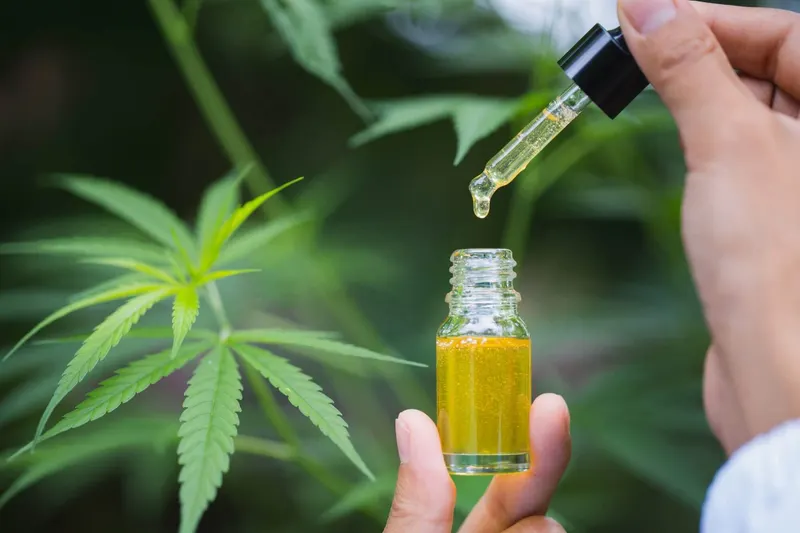
Types of CBD oil
CBD oil falls into three categories: full spectrum, broad spectrum and CBD isolate. Although the three types may look similar, they are very different. What do these terms mean?
In brief, these terms describe which natural cannabis components are present in the CBD oil extracted from the plant. Each type offers different benefits to consider, and these distinctions matter to CBD oil users. At one end of the spectrum is CBD isolate, containing nothing but pure CBD; at the other is full spectrum CBD, which contains various cannabinoids, flavonoids and terpenes.
We recommend reading our article explaining the differences between types of CBD oil in detail.
Are CBD oil and hemp seed oil the same thing?
The key to distinguishing hemp oil from CBD oil is first to understand this general concept: CBD oil is a type of hemp oil, but not every hemp oil is CBD oil. We can think of hemp oil as an umbrella term for both CBD oil and hemp seed oil.
The term hemp oil can describe an oil extracted from any part of the plant, including its stalks, flowers and seeds. Although this includes CBD oil, the terminology used when discussing hemp oil and CBD oil differs. In most cases, hemp oil describes the nutritious oil called hemp seed oil, commonly used in food preparation. At other times, hemp oil can also describe CBD oil.
Although both are considered types of hemp oil, hemp seed oil and CBD oil are consumed for different purposes. Hemp seed oil is mainly used in cooking and body care products for its high nutritional value. CBD oil, while also nutritious, is primarily used in various forms by people seeking to promote their general health naturally.
The fundamental difference is that CBD oil is obtained from cannabis flowers and has a high cannabinoid content. Hemp seed oil is obtained by cold-pressing hemp seeds and contains abundant vitamins as well as omega-3 and omega-6.
We recommend this article explaining the differences between hemp seed oil and CBD oil in detail.
Which cannabinoids are commonly found in cannabis?
The most basic way to distinguish cannabinoids is to classify them by their degree of psychoactivity. For example, unlike CBG, CBC and CBD, THC, CBN and CBDL, along with some other cannabinoids, are known to have varying degrees of psychoactivity. Below is a list of cannabinoids commonly found in cannabis.
CBC – Cannabichromene
CBD – Cannabidiol
CBG – Cannabigerol
CBN – Cannabinol
CBDA – Cannabidiolic acid
CBDV – Cannabidivarin
THC – Tetrahydrocannabinol
THCA – Tetrahydrocannabinolic acid
THCV – Tetrahydrocannabivarin
What are the differences between CBD and THC?
Both CBD and THC work with receptors that release neurotransmitters in our brains. Neurotransmitters are chemicals responsible for carrying messages between cells and affect pain, mood, sleep, immune function, stress and memory. Although the close relationship between these two compounds may suggest they have the same effects on the body, differences in their molecular structures indicate otherwise.
CBD and THC are the most common cannabinoids in cannabis. They occur in both industrial hemp (Cannabis Sativa) and Cannabis Indica. Cannabis Indica contains much more THC, while Cannabis Sativa contains more CBD. CBD can be produced from either industrial hemp or Cannabis Indica. CBD produced from industrial hemp contains 0.3% THC or less, while Cannabis Indica has higher THC concentrations.
CBD and THC actually have the same chemical composition: 21 carbon atoms, 30 hydrogen atoms and two oxygen atoms. What distinguishes these almost identical compounds is a different arrangement of a single atom. Considering that an atom is approximately a million times smaller than a human hair, we are talking about a microscopic difference. This gives CBD and THC different chemical properties and causes them to affect our bodies differently.
Although CBD is described in terminology as a non-psychoactive cannabinoid, that is not quite the full picture. Its positive effects on anxiety, stress and depression indicate that it, too, has positive psychoactive effects.
Is THC (tetrahydrocannabinol) harmful?
Large amounts of THC can cause unwanted psychoactive or physical effects, including paranoia, forgetfulness and impaired motor function. However, research shows that THC is beneficial when used with medical authorization for issues such as depression, pain, nausea, headaches and insomnia.
What is the endocannabinoid system?
The first step toward discovering the endocannabinoid system (ECS), a complex cell-signaling system found in almost all living creatures, began in the early 1960s when Dr. Raphael Mechoulam, known as the “father of cannabis research,” first isolated CBD and THC and identified their stereochemistry.
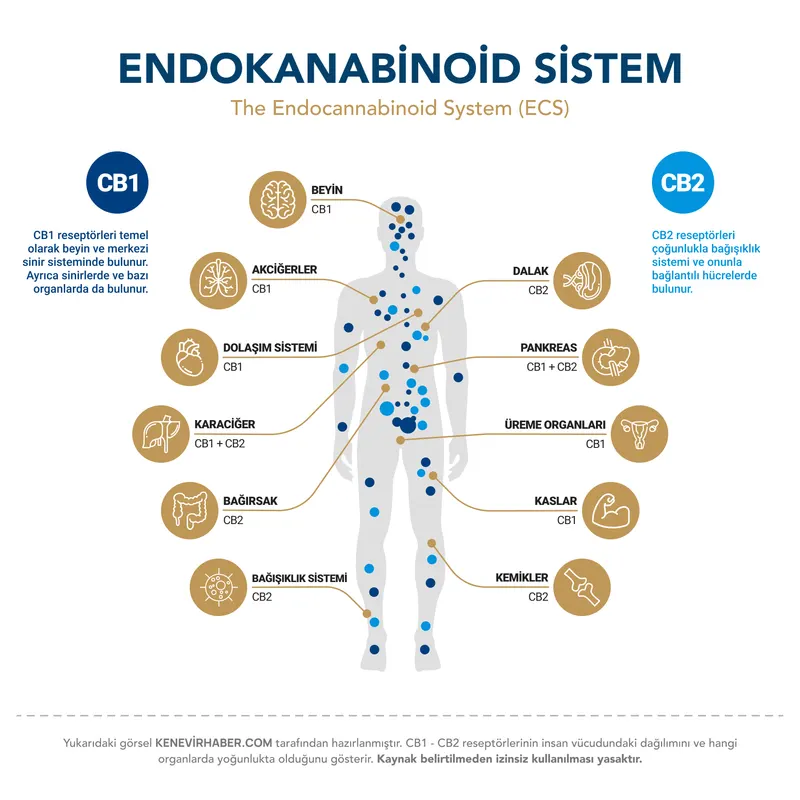
Experts are still working to fully understand the endocannabinoid system. So far, we know that it helps regulate functions and processes including sleep, mood, appetite, memory, reproduction and fertility. The endocannabinoid system is also active in our bodies even when we do not use cannabis-derived products.
The endocannabinoid system has three main components: endocannabinoids, receptors and enzymes.
You can read our detailed article about the endocannabinoid system here.
How is CBD oil used?
The most popular way to use CBD oil is to place drops under the tongue.
However, the options available for using CBD fall into several general categories, each with its own advantages and disadvantages. Growing demand for CBD means you can now choose from a wide range of products, including isolates, tinctures, gummies, capsules and topicals. Other options are listed below.
- CBD smoking products and e-cigarettes (inhalation)
- CBD foods and capsules (digestion)
- CBD tinctures and CBD oil concentrate (digestion)
- Topical and transdermal CBD (absorption)
- Water-soluble CBD (digestion)
What doses of CBD oil should be used?
There is no single correct dose of CBD oil. Many factors determine the dose, including the user's body weight, the condition being treated, CBD tolerance, and the concentration and type of CBD in the product.
Numerous studies have found CBD to be very safe and to have healing properties for our bodies. Studies show there is no universal dose everyone should take. In addition, because CBD is not yet regulated by the Food and Drug Administration (FDA) and there is no officially recommended dosage, it can be difficult to know how much CBD to take.
Studies in humans and animals have highlighted that CBD produces different responses in the body at different doses. Most human studies have used daily doses ranging from 20 to 1,500 milligrams.
Click to read “How is CBD oil used, and at what dose?”
Some benefits of CBD
Research has shown CBD to be supportive and effective in treating many diseases and conditions.
- Epilepsy
- Anxiety disorders
- Insomnia
- Alzheimer's disease
- Parkinson's disease
- MS
- Huntington's disease
- Chronic pain
- Psychological conditions
- Depression
- Cancer
- Nausea
- Migraine
- Asthma
- Infectious diseases
- Rheumatism
- Arthritis
- Irritable bowel and Crohn's disease
- Cardiovascular conditions
- Diabetes
Improves movement disorders
Research has shown that cannabinoids may be effective in improving diseases that cause movement disorders, such as Parkinson's disease and dyskinesia.
Reduces pain
Medicines containing cannabis extracts, including CBD, have been shown to reduce chronic pain effectively.
Psychosis and bipolar disorder
One study found that 14 days of CBD administration in rats increased levels of brain-derived biomolecules and protected against oxidative damage in the brain. Because oxidative stress plays an important role in the development of bipolar disorder, researchers believe CBD may be useful as a treatment.
Helps combat drug addiction
A study in mice found that CBD injections could normalize changes observed following heroin seeking. Based on their findings, the researchers suggest CBD could be a potential treatment for heroin addiction.
Which industries use CBD?
Although CBD is most widely used in food products, CBD-containing products are growing rapidly in many industries. Cosmetics and beauty lead the way. Creams, lotions and makeup containing CBD are the first choice for many people. The main industries using CBD include:
- Pharmaceuticals and food supplements
- Personal care and cosmetics
- Food and beverages
- Tobacco
- Textiles and fashion
- Pet products

Is CBD oil sold in Türkiye?
CBD oil is not yet sold legally in Türkiye. Products are sold illicitly under the counter, but we do not recommend them. Unfortunately, we have also heard of many sellers marketing hemp seed oil as CBD oil and defrauding people in need. We therefore do not recommend buying an unapproved product.
Hemp seed oil, which is also sold in our country, should not be confused with CBD oil. CBD oil comes from plants with high CBD content, whereas hemp seed oil comes from hemp seeds. You can read the detailed article on this subject here.


