
You have overcome the obstacles to obtain CBD oil, which was not legally available in Turkey at publication, and are using it. But do you know what it contains? Have you heard of MCT oil, terpenoids, flavonoids or phytonutrients? Here we focus on what you need to know about CBD oil ingredients.
When separated from hemp and dried, 100% pure CBD is a white, solid, crystalline substance resembling table salt. Contrary to expectations, pure CBD powder is not fully effective alone. If you eat a spoonful of pure CBD extract, much of the active compound passes through the kidneys and is eliminated as waste. For effective absorption and metabolism, CBD needs to be infused into a carrier oil.
Consumption in oil is different because cannabidiol dissolves in fat rather than water. It has a high affinity for the lipid content of oils such as coconut and olive oil. Crystalline CBD easily dissolves in oil, attaching to molecular compounds and allowing bodily absorption and use.
A high-quality carrier oil is consequently the most important component of any CBD tincture.
Which oils are used with CBD?
Many CBD products come from raw industrial hemp. As a reminder, industrial hemp generally refers to varieties with less than 0.3% THC. Other cannabis varieties may contain up to 30% THC. Both belong to the Cannabis family.
Hemp seeds produce a high-quality oil described in the original article as containing beneficial supplements such as phytonutrients, phytocannabinoids, terpenes and flavonoids. This raises a question: why do some manufacturers use coconut or olive oil as a carrier rather than oil from hemp itself? For a full spectrum oil, why not use only hemp seed oil as the CBD carrier?
According to many doctors and scientists, coconut oil has properties believed to support overall absorption and metabolism. This fractionated oil is called MCT oil.
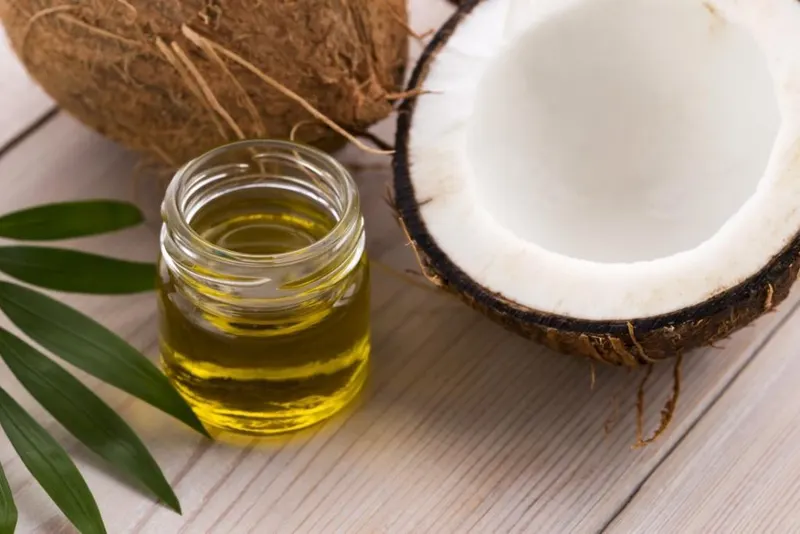
MCT oil derived from coconut oil
Is MCT oil right for you? (Medium-chain triglycerides)
MCT is a natural extract from raw coconut oil, referring to medium-chain triglycerides. Coconut oil contains both medium- and long-chain triglycerides. Many studies have suggested superior digestive efficiency for MCTs.
Many supplement manufacturers, including CBD tincture makers, have therefore begun infusing raw materials into MCT oil. Separating MCTs from LCTs is difficult, requiring highly technical equipment and considerable chemistry expertise.
Remember, however, that the primary goal is CBD oil's therapeutic effects rather than the coconut extract's enhanced digestive properties. Whether CBD is infused into MCT, coconut, olive or hemp seed oil probably makes little difference. What matters is a quality CBD product obtained using supercritical CO2 methods, without added chemicals, thinners, heavy metals, pesticides or fertilizers.
Why does my CBD oil label say “hemp extract”?
Another label detail you may notice is “hemp extract.” This means a full spectrum mixture containing additional active hemp compounds. Full spectrum oil includes beneficial aromatic terpenes, flavonoids, omega fatty acids, phytonutrients and other natural phytocannabinoids such as CBG and CBC.
Manufacturers use “hemp extract” rather than listing each component because, frankly, they do not know the exact amount of every compound. An oil labeled this way contains more than CBD isolate. Studies have shown full spectrum extracts to be more beneficial than isolated extracts.
We recommend “Full spectrum CBD, broad spectrum CBD and CBD isolate.”
We hope this helps you understand your oil's ingredient label. CBD oils are essentially made using coconut, MCT, olive or hemp seed oil. If a product contains something else, such as flavored tinctures, it may not be truly pure. Research your oils thoroughly and do not hesitate to change brands when necessary.


