
Bir Başkadır, written and directed by Berkun Oya and released on Netflix on November 12, addresses many prejudices in Turkish society, including prejudice against cannabis. In the series, Gülbin tries a cannabis medicine she has made to reduce her brother's cerebral palsy seizures, provoking a harsh reaction from her older sister. The scene neatly captures society's view of cannabis, both here and around the world.

The whole world, not just Türkiye, is divided. Some research cannabis and see the reality; others see it as poison under the influence of historical propaganda. The main difference is that one group has challenged its prejudices and become informed, while the other is certain of its prejudices and holds opinions without knowledge. Before discussing the dispute, I want to explain the propaganda directed against cannabis.
Why was cannabis banned?
Cannabis can be described as a controversy of the last century. Historically, people mostly used it for treatment. In early-1900s America, farmers were required to plant it, so what happened to bring about a ban?
You can read about this plant's 6,000-year history below.
The 6,000-year history of medical cannabis
More damaging to the industry than prohibition itself was treating industrial hemp and Cannabis Indica as the same thing. This detail lies behind the ban, yet even today few people know it. Understanding the difference between these types is necessary to understand why cannabis was prohibited.
Industrial hemp (Cannabis Sativa Legaris)
Industrial hemp can grow up to five meters tall, and many products can be made from its stalks, fibers and seeds. In our country it is also popularly called kendir. It contains very little THC and has no psychoactive effect.
Recreational cannabis (Cannabis Indica)
Cannabis Indica is a high-THC type used mainly recreationally that grows no taller than two meters. Today's recreational cannabis with psychoactive effects is not pure indica but hybrid sativa-indica varieties. Their short stature makes them unsuitable for industrial use. Their cultivation and use are prohibited in our country.
In brief, although these two types look similar, there is a crucial difference. One is used recreationally because of its high THC content, while the other contains no THC and has no psychoactive effect.
Propaganda
This distinction lies at the heart of the propaganda. Those who wanted to prohibit industrial hemp first portrayed both types as identical, then placed them in the narcotics category.
In early-1900s America, the rapidly growing hemp industry began to trouble certain interests. The invention of hemp-stalk processing machines accelerated production, and consumers' preference for hemp paper, fabrics and other goods made synthetic fiber and wood-pulp paper manufacturers hostile to hemp.
This particularly troubled W. R. Hearst, one of the era's biggest media owners, and DuPont, which had invested heavily in synthetic fibers. Believing their interests were threatened, they used their enormous media power to criminalize cannabis.
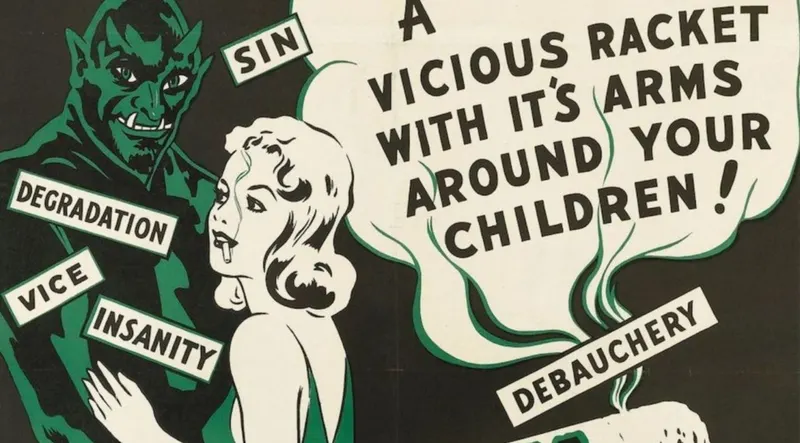
After launching an intense propaganda campaign, the pair portrayed all cannabis types as identical and secured a partial ban in 1937. False stories ranged from racist allegations that Black men used cannabis to rape white women to claims linking traffic accidents to cannabis. Unable to resist the pressure, the American government fully classified cannabis as a narcotic and prohibited it in 1970.
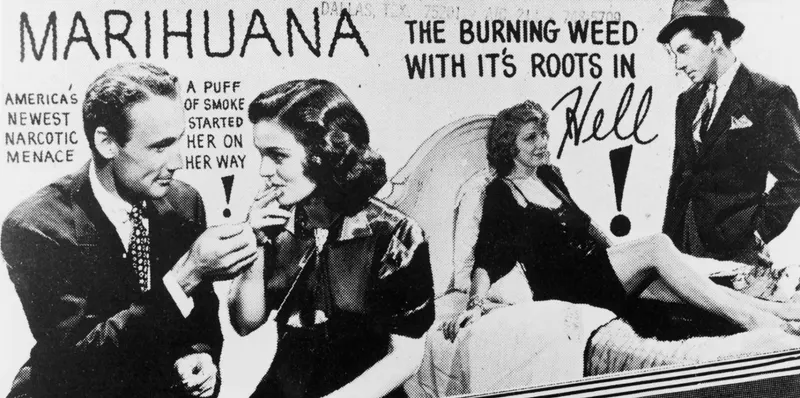
In later years, American politicians saw this as a source of votes. They went beyond domestic restrictions and pressured the rest of the world, leading to worldwide prohibition.
A narcotic or a medicine?
The answer depends on where you live. If you live in Canada, you can buy cannabis at a shop on the corner and smoke it in the nearest park without interference. Canada is one of the first countries to define cannabis entirely as medicine. Smoking tobacco in the street is prohibited, while consuming cannabis is permitted.
As mentioned earlier, Cannabis Indica has psychoactive effects because of its high THC content. However, current research shows cannabis has a very low addiction rate. Following this research, many countries removed it from the narcotics category.
Prejudice
As I noted above, these perceptions and prohibitions ultimately stem from propaganda by a few greedy companies. This plant, whose history is as old as humanity's, is back on the agenda after a century's interruption.
Returning to the television series, the two sisters arguing over cannabis reflect a very realistic perspective. The central problem is that cannabis opponents object without valid scientific evidence or arguments. Most do not even know why they object. The misinformation of early-1900s propaganda continues to be passed from generation to generation.
Research will show that cannabis prohibition was entirely a matter of conflicting interests. Remember, too, that America, which banned cannabis in the 1900s, is now among the countries leading the way toward legalization.
Opposition to something should be based on research, not hearsay. In today's world, there is a high chance that an opinion you defend is based on a false news story.


