
CBD oil benefits horses just as it benefits cats and dogs. Before discussing details, you do not need a different oil for your horse. Some oils are presented as “specifically for horses,” but this is simply marketing. You can give your horse the same oil you use yourself.
As in humans, weight is what matters.
Why do people use CBD for horses?
Owners generally use CBD oil to calm horses. However, as in humans, it has many beneficial effects beyond calming. Conditions it may help include:
- Pain
- Inflammation
- Anxiety
- Chronic stress
- Discomfort
CBD is used to support treatment and improve overall quality of life, rather than to treat horses itself. It strengthens metabolism and the immune system and will speed recovery after an intense training day.
CBD may support horses in these areas:
- Metabolism and appetite
- Emotional state and mood
- Immune system
- Mobility
- Digestion and gut health
- Irritated skin
Is CBD safe for horses?
Like humans, horses have an endocannabinoid system (ECS). As in humans, it is involved in illness and mood. Its basic functions include regulating digestion, sleep, appetite, inflammation, mood, immune function, temperature, memory and more. For further information, we recommend:
- Everything you need to know about the endocannabinoid system
- What you need to know about the endocannabinoid system
Most research in humans and animals suggests CBD is neither toxic nor addictive [1].
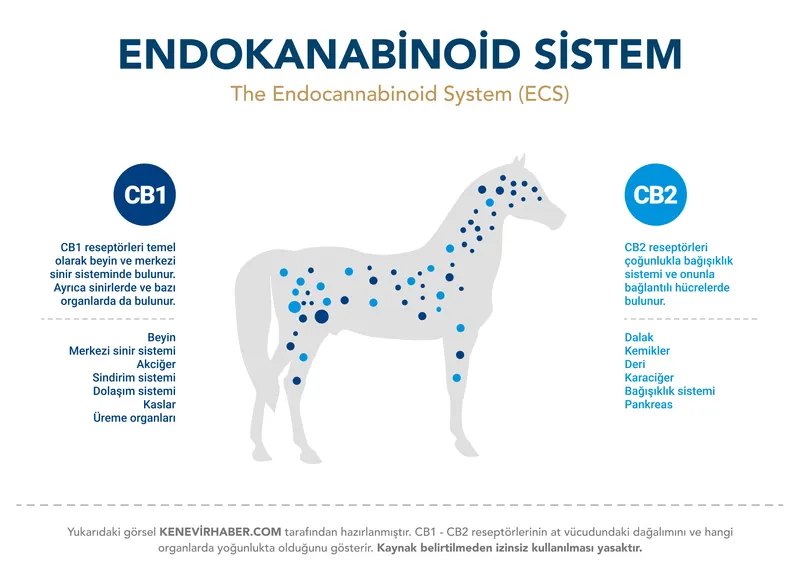
Some animal side effects include diarrhea, drowsiness and dry mouth. These are mild and generally occur at very high doses.
Dosage guide: how much CBD should I give my horse?
Animals, especially horses, are more sensitive to CBD. According to Dr. Luedke, a veterinarian and leading expert on equine CBD, horses should receive lower doses than other animals.
Dr. Luedke says horses need lower doses per kilogram.
For example, if dogs receive 1–2 mg per kilogram, horses need less, such as 0.25–1 mg per kilogram.
Their sensitivity may relate to how they digest food. Horses obtain most of their energy through fermentation rather than digestion as other animals do.
According to Kentucky Equine Research, simple issues such as too much grain, unsuitable feed or moldy feed and grain can harm equine digestion. This sensitivity may make horses more sensitive to CBD.
Therefore, start low and increase gradually when giving CBD to your horse. Starting at low doses lets you monitor progress and adjust when benefits appear.
Many people begin with 40 mg and increase until the desired results occur. According to Dr. Juliet M. Getty, the best equine dosages are:
- Small horses (180–300 kg) — 25–50 mg
- Average horses (300–500 kg) — 75–170 mg
- Large breeds (500–800 kg) — 120–200 mg
Remember to consult a veterinarian with expertise in this area before using CBD oil.


