
During your education, you probably learned about the 11 main organ systems that make up the human body and work together like an interconnected machine. But did you know you also have an endocannabinoid system? Unless you are a research scientist or interested in medical cannabis, it is perfectly normal not to have heard of it.
The first steps toward its discovery began in the early 1960s with Dr. Raphael Mechoulam, known as the “father of cannabis research.” The picture became clearer in 1990 when Dr. Lisa Matsuda identified the structure of CB1, a cannabinoid receptor abundant in the central nervous system. While trying to understand how the psychoactive cannabinoid THC affects the body, researchers found a highly complex network of cannabinoid receptors. CB2 was discovered and cloned in 1993 by researchers at Cambridge University.
Experts are still working to fully understand the endocannabinoid system, a complex cell-signaling system. So far, we know that it helps regulate vital functions and processes such as sleep, mood, appetite, memory, reproduction and fertility, and remains active even when we do not use cannabis-derived products.
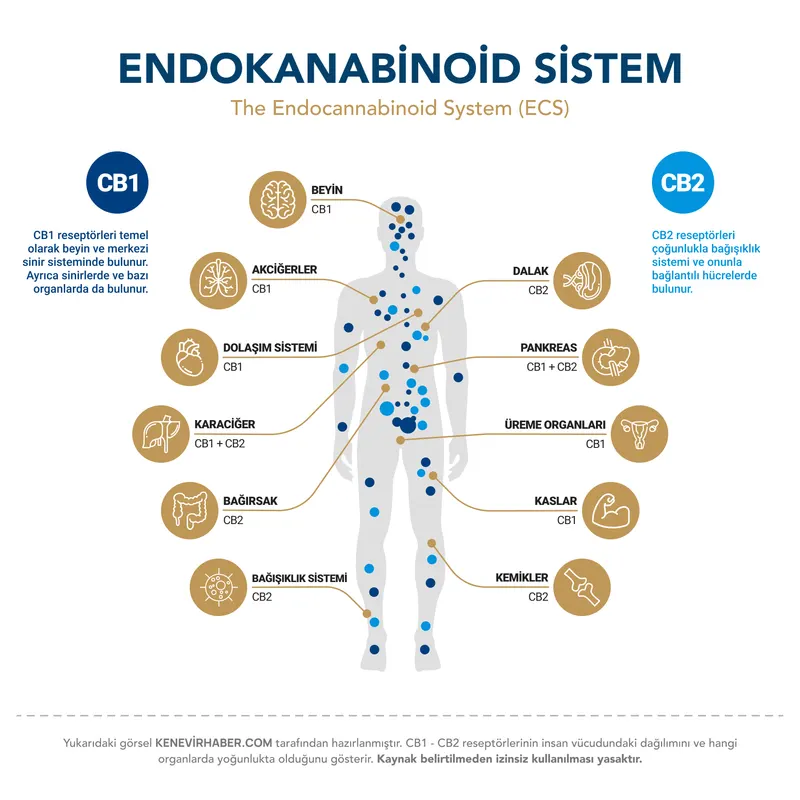
7 details you probably did not know about the endocannabinoid system
1. All animals have an endocannabinoid system
As humans, we like to consider ourselves special. But the endocannabinoid system reveals how much we share with other species. All vertebrates and invertebrates are known to have one. The most primitive animal in which cannabinoid receptors have been identified is the sea squirt, which evolved 600 million years ago.
2. Endocannabinoid receptors are the body's most abundant neuromodulatory receptors
Research indicates their total number exceeds all other neuromodulatory receptors, including those for the neurotransmitters serotonin and dopamine. Anandamide alone has the most receptors in the brain and is important for maintaining a healthy central nervous system.
3. The endocannabinoid system has been found to play a role in many diseases
The system helps bring the body into homeostasis, or balance. It is therefore unsurprising that scientists observe changes in its activity in a range of diseases. Changes in endocannabinoid levels and increased receptor expression have been observed in rheumatoid arthritis, cancer and neurodegenerative disorders. This suggests the endocannabinoid system may be an effective target for restoring balance and health.
4. Clinical endocannabinoid deficiency may underlie some diseases
When the endocannabinoid system works properly, various bodily systems remain in dynamic balance. What happens when it is dysfunctional or damaged? Scientists have identified dysfunction in conditions involving high pain and sensitivity to stimuli, such as migraine, fibromyalgia and irritable bowel syndrome.
The hypothesis that this dysfunction may underlie certain disorders is known as clinical endocannabinoid deficiency. It is believed that taking naturally occurring plant phytocannabinoids such as CBD may correct this deficiency, ease symptoms and help maintain health balance.
5. The endocannabinoid system explains why natural cannabinoids have healing effects
Before prohibition, industrial hemp and Cannabis Indica were used for thousands of years to treat conditions including epilepsy, pain, arthritis, depression and nausea. Traditional healers did not know why cannabis worked, but their experience and observations formed the basis for later scientific research. Discovery of the endocannabinoid system provided a biological basis for phytocannabinoids' healing effects and increased interest in cannabis as a natural medicine.
Research has shown that small doses of natural cannabinoids from cannabis and other plants help support the endocannabinoid system and increase its signaling. This suggests plant cannabinoids can strengthen our central physiological healing system.
6. Exercise and diet can also strengthen the endocannabinoid system
Scientists have found that prolonged aerobic exercise raises levels of anandamide, an endocannabinoid that makes us feel good. A suitable diet can also help. Increasing consumption of omega-3 fatty acids found in oily fish, flaxseeds and hemp seeds may support endocannabinoid signaling in the brain.
7. Doctors know very little about the endocannabinoid system
Trying to discuss the system with your doctor can be frustrating, because most doctors have not been trained in it. Although more doctors are now being taught about it, for the moment we should do more research ourselves.
A survey conducted in Sacramento in 2013 asked whether the endocannabinoid system formed part of US medical school curricula. It found that only 13% of future doctors were taught about it. This means many patients and independent researchers know far more about the endocannabinoid system than doctors do.


