
Industrial hemp (Cannabis sativa L.) is a variety within the Cannabis genus. Although cannabis is the common name for the plant's varieties, hemp is generally used for Cannabis sativa L. grown for industrial purposes. Hemp associations define any variety with less than 0.3% THC (tetrahydrocannabinol) in its leaves and flowers as industrial hemp.
Industrial hemp has thousands of uses, including paper, textiles, biodegradable plastics, building materials, health foods and fuel. The discovery of material made from hemp 10,000 years ago, alongside evidence of use throughout thousands of years of history, supports the theory that it was humanity's first cultivated crop. Hemp is also one of the fastest-growing known biomass sources.
Differences between industrial hemp and Indian cannabis
Indian cannabis (Cannabis indica L.) is a term used here to classify varieties containing more than 0.3% THC and capable of psychoactive or mood-altering effects. While industrial hemp typically contains less than 0.3% THC, cannabis grown for recreational and medical purposes may contain 6–20% or more.
Industrial hemp (Cannabis sativa L.) is grown for industrial uses across thousands of product categories, whereas Indian cannabis (Cannabis indica L.), with lower-quality fiber, is mainly used recreationally and for medicine production.
Briefly, the most important distinguishing characteristic is the proportion of THC in the plant.
Four main differences between industrial hemp and Indian cannabis
As different varieties within the same genus, industrial hemp and Indian cannabis share many similarities and may look identical. However, their legal regulation, composition and uses mean they should not be confused.
THC content
The key defining distinction is chemical composition. Both can produce nonpsychoactive CBD, but their THC levels differ greatly. Industrial hemp may contain no more than 0.3% THC by dry weight, while Indian cannabis may contain up to 30%.
Legal status
Their different THC levels lead to different laws on cultivation and use. In many countries, industrial hemp containing no more than 0.3% THC has been removed from the illegal-substance category under agricultural improvement legislation.
Indian cannabis above the THC threshold remains treated as a controlled substance and illegal under controlled-substance legislation.
Cultivation conditions
Because they are harvested for different purposes, industrial hemp and Indian cannabis naturally require different growing conditions.
Indian cannabis varieties are grown in controlled settings designed to optimize their characteristics and produce female plants with flowering buds. Growers must attend to every life-cycle stage and provide suitable temperature, lighting and humidity control.
Industrial hemp is grown to maximize size and yield. It is therefore usually cultivated outdoors and does not require the same degree of control and attention.
Uses
Each offers uses suited to its composition. Although Indian cannabis is widely known for recreational use, it has demonstrated potential in a broad range of therapeutic applications, particularly cancer and epilepsy.
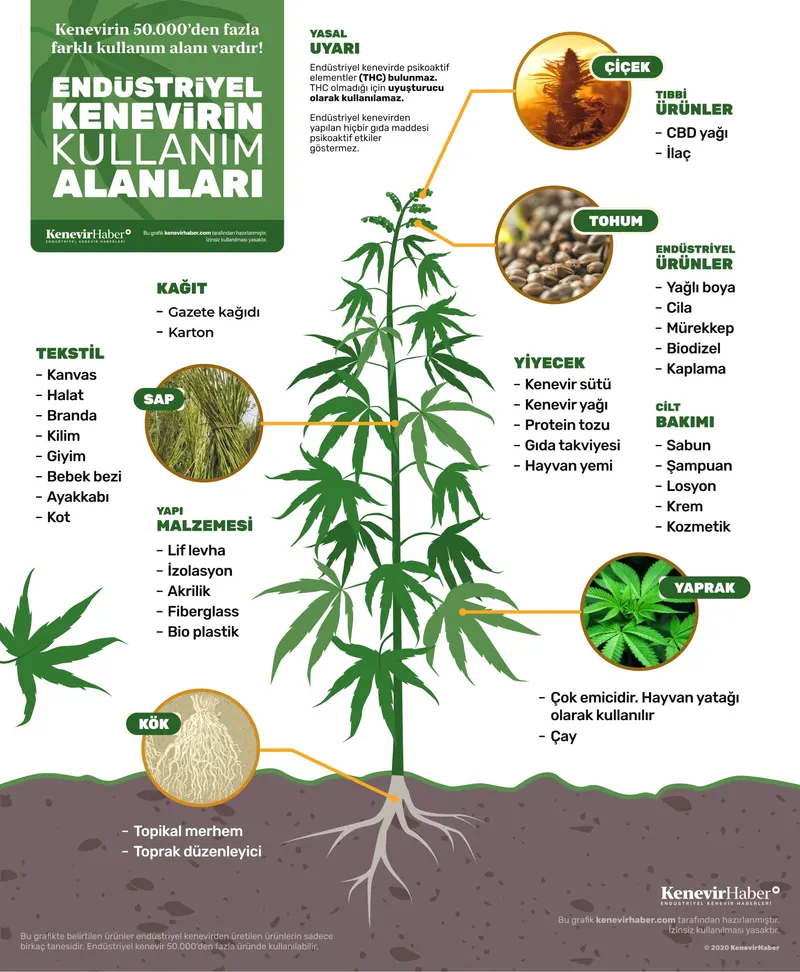
Industrial hemp has thousands of uses in many categories. Products made from its roots, stalks, leaves and seeds include industrial products such as paper, fabric, building materials and plastics, as well as foods and cosmetics such as cooking oil, flour, creams and today's popular CBD oil.


