
Unlike CBD oil, whose production and sale were prohibited in Turkey at the time of publication, hemp seed oil can be found in almost every herbal shop, pharmacy and online store. Hemp seed oil should not be confused with full spectrum oil extracted from hemp leaves and flowers. As its name suggests, hemp seed oil comes from the seeds of the hemp plant and is completely legal.
Hemp seed oil is one of the healthiest and most beneficial oils in the world. Hemp seeds contain many nutrients, including omega-3/omega-6 fatty acids in a ratio considered ideal, magnesium, calcium, iron, zinc and vitamins. They do not contain the cannabinoids and terpenes found in the plant. Although hemp seed oil does not naturally contain cannabinoids, trace amounts may be present because seeds can come into contact with resin secreted by hemp flowers.
Which types of hemp are used for hemp seed oil?
Hemp seed oil is obtained from the seeds of Cannabis Sativa L., or industrial hemp varieties, containing 0.3% THC (tetrahydrocannabinol) or less. Although only hemp seeds are needed to obtain pure hemp seed oil, not all hemp varieties are suitable. Tall industrial hemp varieties that produce abundant seeds yield more oil than shorter varieties with smaller seeds.
How is hemp seed oil produced?
Hemp seed oil is produced using a “cold pressing” technique involving low heat and pressure to make the most of the oil's properties. When seeds are pressed without controlling the process, the heat generated by pressure and friction causes the oil to lose many of its qualities. Hemp seed oil is therefore cold pressed at lower temperatures to preserve its flavor, aroma and nutritional value.
Before pressing, hemp seeds need to be 99.9% clean and have their outer shells removed. Unrefined, cold-pressed hemp seed oil is obtained through mechanical extraction at a low temperature not exceeding 40 degrees. Cold-pressed hemp seed oil is not chemically cleaned or bleached; sediment is mechanically removed through filtration.
Differences between “unrefined” and “refined” hemp seed oil
Because unrefined oils are produced without chemical treatment or high temperatures, they have a shorter shelf life. They must be stored in cool places, and the chain between producer and consumer should be kept short. Incorrect storage and irregular handling during transport can make cold-pressed oil spoil quickly. The first sign of spoilage will be an unusual smell. Properly stored cold-pressed hemp seed oil kept in tinted bottles has a strong green color and a pleasant smell resembling a mixture of freshly cut grass and nuts.
Refined oils, on the other hand, are bleached and deodorized through chemical processes. They are lighter in color, look clearer and contain no small particles. Refining is a complex process involving chemical compounds and temperatures as high as 270 degrees. During processing, most nutrients, vitamins and omega-3 and omega-6 fatty acids, the most important components of hemp oil, are lost. Refined oils consequently last much longer. Refined hemp oil is primarily used in cosmetics and in producing various ointments and even plastics.
There are two main reasons why most cosmetics manufacturers prefer refined hemp seed oil:
- Because refined hemp seed oil lasts longer, it allows a longer supply chain between production and the consumer, larger inventories and lower risk for manufacturers.
- Refined hemp seed oil is substantially cheaper than unrefined oil.
The nutritional value of hemp seed oil
As mentioned earlier, hemp seed oil has a rich nutritional composition. As you might expect, this composition is associated with many health benefits. Let us look at these nutrients in detail.
Vitamins
Thiamine
Hemp seed oil contains thiamine, also known as vitamin B1. It plays a vital role in cell metabolism, converting carbohydrates and amino acids into energy. It is also important to the proper functioning of the heart, muscles and nervous system. Thiamine deficiency is rare, although low levels may occur in people with alcoholism and kidney patients receiving dialysis.
Riboflavin
Riboflavin, or vitamin B2, plays an important role in releasing energy in the body, just like other B vitamins. It also has a major role in growth, normal vision development, reproduction, red blood cell production and healthy skin. Riboflavin is a water-soluble vitamin that must be replenished every day because it is cleared from the body daily. The best way to obtain vitamin B2 is to consume riboflavin-rich foods such as hemp seeds and hemp oil.
Riboflavin deficiency is rare in developed countries because it occurs in many common foods. Groups prone to vitamin B2 deficiency include young people, people with alcoholism and older adults. Deficiency is generally linked to poor nutrition.
Niacin
Vitamin B3, or niacin, is very important to overall health. Niacin helps improve cholesterol levels and reduce cardiovascular problems. It also supports the regular functioning of the digestive system and liver.
Because niacin is found in many foods, deficiency is rare in developed countries. Symptoms include depression, poor circulation, indigestion, fatigue, digestive problems, mental impairment and skin problems.
Pyridoxine
Pyridoxine, or vitamin B6, is a water-soluble vitamin found in several forms in our bodies and the foods we eat. Its most active vitamin form is pyridoxal 5'-phosphate (PLP).
It occurs naturally in foods and nutritional supplements. Together with other B vitamins, it helps convert food into energy. Pyridoxine's functions include helping produce antibodies needed by the immune system, helping synthesize red blood cells, maintaining amino acid and fatty acid metabolism and regulating blood glucose. It also supports the development of an unborn baby's brain and nervous system.
Folate
Folate is also called vitamin B9 or folic acid. It is water soluble and helps the body as a coenzyme. Its functions include producing healthy blood cells, synthesizing DNA and RNA, strengthening immunity, improving psychological functions and reducing fatigue. Vitamin B9 also reduces heart disease risk and protects against cancer development.
Folate deficiency can result from insufficient consumption. Associated symptoms include fatigue, loss of appetite and irritability. Vitamin B9 deficiency during pregnancy can lead to serious birth defects.
Vitamin E
Vitamin E is an antioxidant occurring naturally in food. Alongside hemp seeds and oil, it is found in nuts, seeds and leafy vegetables. It is fat soluble. Its benefits include protection against oxidative damage, maintaining normal cell development, forming part of cell membranes and protecting polyunsaturated fatty acids.
Vitamin E deficiency may result from inadequate intake or poor absorption. Severe deficiency manifests as vision problems, unsteady walking, muscle weakness and abnormal eye movements.
Minerals
Calcium
Calcium is very important for strong teeth and bones. It also helps maintain normal blood pressure and plays a significant role in muscle contraction, normal heartbeat and blood clotting.
Potassium
Potassium helps the body grow and develop, transmits nerve impulses and is essential for muscle contraction. It is also a key mineral maintaining water balance between the body's cells and fluids.
Phosphorus
Together with calcium, phosphorus helps form teeth and bones. It is also part of vital cell membrane components. It is essential for tissue growth, renews damaged tissues and maintains the balance between acids and bases in fluids within body cells.
Magnesium
Magnesium's benefits include activating B vitamins, bone mineralization, protein synthesis and releasing energy from nutrients.
Copper
Copper is beneficial for forming red blood cells (hemoglobin) and connective tissue. It contributes to oxygen delivery and helps the development of communication between brain and nerve cells. Iron absorption, storage and metabolism are among its many other benefits.
Iron
Iron is a major component of hemoglobin and myoglobin, which carry oxygen in the blood and muscles. Iron helps produce new cells, hormones and amino acids. It also plays an important role in the activity of enzymes involved in energy production.
Zinc
Zinc helps metabolize proteins, fats and carbohydrates. It strengthens immunity and supports healthy skin development and maintenance, cell reproduction and enzyme activity in body cells.
Manganese
Manganese works with various enzymes to assist countless bodily processes. These include connective tissue formation, blood clotting, reproductive hormone production, brain and nerve development and bone formation.
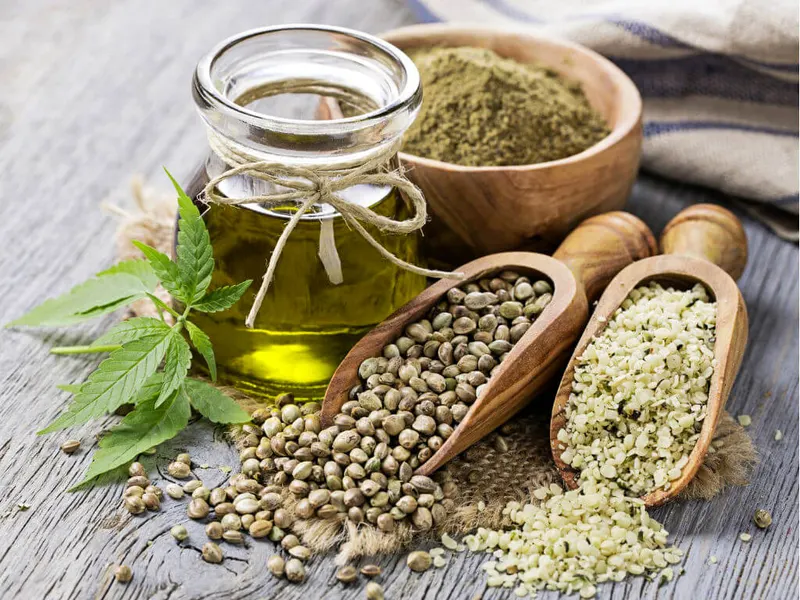
Hemp seed oil – hemp seeds – hulled hemp seeds
The health benefits of hemp seed oil
Hemp seed oil has an unparalleled ability to stabilize and restore the functions of major internal organs and systems. Its unique formula accelerates metabolism, and including it in a daily diet is important for recovering quickly from prolonged illnesses.
Cardiovascular health
Hemp seed oil has an omega-6 to omega-3 fatty acid ratio of 3:1, considered ideal for heart health and cardiovascular functioning. These nutrients participate in many biological processes and help prevent a range of degenerative diseases.
Hemp seed oil contains not only omega-3 and omega-6 fatty acids in an ideal ratio but also phytosterols. Phytosterols lower harmful blood cholesterol and help clear cholesterol plaques from blood vessels. Hemp seed oil also contains vitamins C, E and B6, potassium, magnesium and manganese, which benefit the heart's blood vessels and muscles.
Lower cholesterol
It is important to understand cholesterol and high blood cholesterol. Cholesterol is a waxy, fat-like substance in body cells. Although the body needs it to synthesize hormones, vitamin D and other essential substances, high blood cholesterol is undesirable and can lead to heart disease.
Hemp seed oil accelerates metabolic processes. A higher metabolic rate helps burn fat faster before it builds up on artery walls and reduces blood cholesterol.
Hormonal balance
Hemp seed oil contains gamma-linolenic acid, a compound converted into the hormone prostaglandin PGE1 in the body. This hormone helps maintain hormonal balance and also supports health during menopause.
Brain development and health
Hemp seed oil contains essential fatty acids, including docosahexaenoic acid (DHA), needed for brain development. DHA is very important for brain health and the retina, especially early in life. Mothers consuming hemp seed oil during pregnancy may provide brain- and eye-protective benefits for their developing babies.
Mercury-free fatty acids
Fish oil is often recommended during pregnancy because it contains omega-3 fatty acids. Omega-3 supports brain development, strengthens immunity and regulates mood.
However, fish may contain large amounts of mercury, a toxic heavy metal that delays neurological and overall fetal development. Hemp seed oil is a very good alternative to fish oil because it contains mercury-free omega-3 fatty acids.
Skin and hair care
If you experience skin irritation, redness, rashes or other skin problems, you can use hemp seed oil. Studies have shown that it can significantly reduce dryness to relieve itching and irritation. Its antioxidant and anti-inflammatory properties may also soothe skin and protect against aging.
Hemp seed oil renews and energizes the skin's protective layer. Its high omega-3 and omega-6 content makes it an excellent natural moisturizer. It also increases skin tissue elasticity and water retention.
Hair conditioners and shampoos containing hemp seed oil have an excellent ingredient for making hair stronger and thicker.
Preventing psoriasis
One of the main causes of psoriasis is a lack of omega-6 fatty acids. Because these essential fats are found in hemp seed oil, they increase hydration by preventing skin oxidation.
Diabetes management
Hemp seed oil is excellent for people with diabetes. The nutrients in this oil, which is low in carbohydrates and sugar, help reduce blood sugar levels.
The immune system
The omega-3 and omega-6 fatty acids in hemp seed oil boost immunity and regulate intestinal flora. By protecting against disease-causing microorganisms, hemp seed oil is very useful during cold and flu season, when contact at work, school and socially becomes more frequent.
The respiratory system
Hemp seed oil has been shown to be effective in treating respiratory infections and asthma affecting the upper and lower airways. Including it in the diets of patients with upper respiratory catarrh, acute and chronic bronchitis, pneumonia, asthma and tuberculosis is recommended.
The digestive system
Regular consumption of hemp seed oil with meals benefits digestion. It has mild soothing, healing and anti-inflammatory properties for gastritis, colitis, enteritis, stomach ulcers, cholecystitis and hemorrhoids. Its mild laxative effect also makes it suitable for the diets of people prone to constipation.
The musculoskeletal system
Hemp seed oil has anti-inflammatory, soothing and analgesic effects. Rich in alpha-linolenic acid, it may enhance calcium absorption, helping strengthen bones. It can be used in treating rheumatoid arthritis, arthrosis, osteoporosis, lower back pain, sprains, bruises and fractures.
The nervous system
Hemp seed oil benefits the nervous system. It is recommended for inclusion in the diets of people experiencing irritability, insomnia, childhood autism, hyperactivity, attention deficit, delayed psychomotor responses and various behavioral disorders.
For women
Regular consumption of hemp seed oil with meals helps improve overall health during menopause and reduce negative premenstrual symptoms. Regular use is recommended for pregnant and breastfeeding women. Vitamin E and unsaturated fatty acids are necessary for full fetal development in the womb.

Hemp seed oil used in cooking
How is hemp seed oil used?
Topical use of hemp seed oil
If you have redness, rashes, acne or irritation, you can apply hemp seed oil directly to the skin.
To make sure your skin does not react adversely, you can test it for 24 hours by applying a little to a small area of your upper arm and covering it with a bandage. If there is no burning, redness or itching, hemp seed oil is safe for your skin.
You can also mix hemp seed oil with ingredients such as lavender, rosemary and coconut oil in recipes applied directly to the skin. However, remember that essential oils such as lavender and rosemary should only be used topically. Consuming essential oils internally is dangerous because they can be poisonous.
Internal use of hemp seed oil
You can consume hemp seed oil orally without a risk of irritation. One to two teaspoons or dessertspoons may be consumed throughout the day. Larger amounts can cause digestive discomfort.
You can also mix it into smoothies, salad dressings and soups. Compared with familiar cooking oils, hemp seed oil is darker and thicker. It is low in saturated fats and high in unsaturated fats. However, it has a low smoke point and is unsuitable for frying because it starts burning early.
Does hemp seed oil have side effects?
Almost every food used to prevent and manage health problems carries a risk of side effects, and hemp seed oil is no exception. Nevertheless, its adverse effects are very rare, occur only in extreme cases and can be considered minor compared with medication side effects. At the time of this article, no cases of toxicity resulting from hemp seed oil consumption had been reported.


